【初心者向け】広角レンズとはどんなレンズ?特徴と選び方のポイントを解説
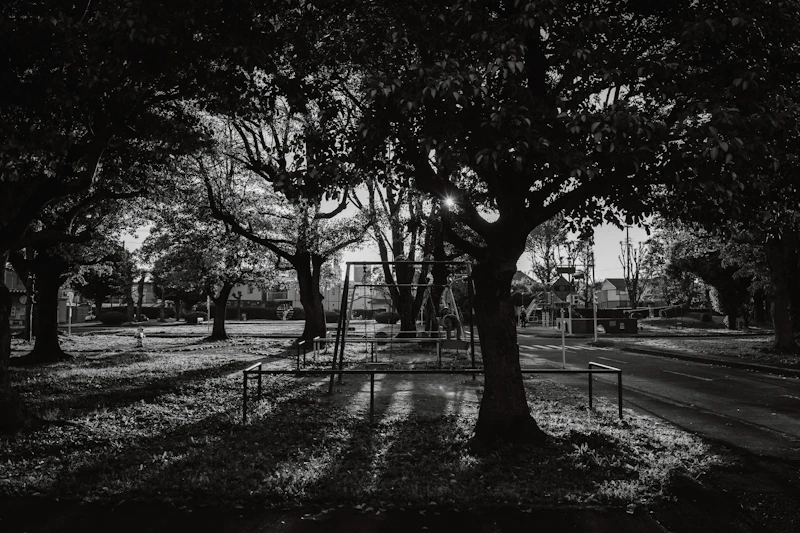
As your children grow, you naturally want to capture them in photos properly. But standard lenses often can't fit an entire landscape or full room interior into a single frame — that's where wide-angle lenses come in. In this article, I'll explain the characteristics of wide-angle lenses, how to choose one, and shooting techniques.
By the end, you'll know how to use a wide-angle lens to capture your kids and family in more impactful ways.
What Is a Wide-Angle Lens? Any Lens Under 35mm Focal Length
Wide-angle lenses have a focal length of 35mm or less, covering a wide field of view. They can fit more subjects into the frame and are ideal for landscapes and architecture. They also exaggerate perspective — though this comes with some distortion to watch out for. Categories include standard wide-angle, ultra-wide-angle, and fisheye.
Characteristics of Wide-Angle Lenses

- Wide field of view
- Deep depth of field
- Exaggerated perspective
- Distortion
Wide Field of View
The defining feature of a wide-angle lens is its wide field of view. Benefits include:
- Emphasizing spatial breadth
- Creating dynamic compositions with strong perspective
- Capturing full scenes in tight spaces like rooms
- Fitting large groups or crowds into one shot
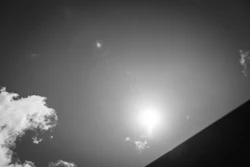
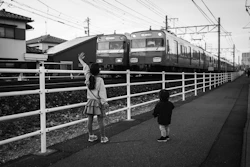
You can capture a wide area in a single frame that a standard lens simply can't cover. On a family trip, you can include both the sweeping landscape and everyone in the group. Indoors, even a cramped room can be captured fully. Vast natural scenery or an entire city skyline can be rendered with dramatic impact.
Deep Depth of Field
A deep depth of field means a wider range of the image is in focus. Both foreground and background appear sharp. The result is a landscape-style image where everything from near to far is crisp — less background blur, more overall context. Even fast-moving kids are easier to keep in focus.
You can include both children and the environment they're in — capturing not just their expression but the place itself.
Exaggerated Perspective

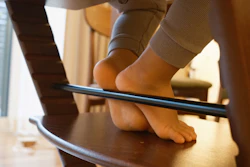
Exaggerated perspective creates a dramatic sense of depth. Wide-angle lenses make nearby subjects appear larger and distant subjects smaller, amplifying the sense of distance. Try placing a child close to the camera so their hands or feet appear large in the foreground — the result is an energetic, dynamic photo.
For portraits, be aware that this perspective can distort body proportions. If you want to capture a natural likeness, use perspective exaggeration sparingly.
Distortion
Wide-angle lenses introduce distortion. Key characteristics:
- Barrel distortion near the image edges
- Faces and bodies can appear stretched unnaturally
- Straight building lines can appear curved
Distortion is strongest near the edges and becomes more pronounced with shorter focal lengths. Software can correct some distortion, and some photographers use it intentionally. To minimize it, keep your subject centered in the frame.
When Wide-Angle Lenses Excel

- Landscape photography
- Architecture and interiors
- Astrophotography
Landscapes
Wide-angle lenses let you capture a sweeping view in one frame — perfect for preserving memory-laden places visited with your kids. It's easy to balance foreground and background, with deep depth of field keeping everything sharp.
Place a child in the foreground against a vast background for an unforgettable shot. Wide-angle lenses are ideal for capturing sky, clouds, and mountain ranges in a single frame, or using lake reflections for symmetrical compositions.
Architecture and Interiors

Benefits for architecture and interiors:
- Capture full scenes even in tight spaces
- Emphasize scale and presence of buildings
- Express space through unique perspective
- Use geometric lines and shapes creatively
You can show an interior's design in full — ceiling, floor, and overall atmosphere come through clearly. Used skillfully, the distortion of a wide-angle lens can further amplify a building's distinctive character.
Astrophotography

Wide-angle lenses are also excellent for star photography. Their wide field of view lets you capture the entire night sky at once for dramatic results. Tips for astrophotography:
- Large-aperture lens
- Tripod mount
- Manual focus
- High ISO
- RAW format
Choose a location with minimal light pollution and pay attention to the moon phase and weather. Use a star-gazing app to plan your composition in advance. Long exposures can capture star trails.
How to Choose a Wide-Angle Lens

Key considerations:
- Focal length
- F-number
- Mount
- Sensor size
- Image stabilization
- Autofocus
- Size
- Weight
Focal Length
Wide-angle lenses have focal lengths of 35mm or shorter — the shorter the focal length, the wider the view. Common choices are 24mm, 28mm, and 35mm. Choose based on your shooting scenarios.
For indoor kids' photography, 28mm or 35mm is a good fit. For landscapes and full building exteriors, 24mm works well. Shorter focal lengths give deeper depth of field and more dramatic perspective. Ultra-wide angles (20mm and under) show more noticeable distortion. For kids, having lenses at a few different focal lengths gives you more flexibility.
F-Number (Aperture)
F-number measures lens brightness. Smaller f-numbers mean a brighter lens — useful for low-light shooting. For frequent indoor shooting with kids, aim for f/2.8 or faster. Bright lenses also offer faster shutter speeds and more background blur potential.
Faster lenses tend to cost more and be physically larger. Slower lenses are typically smaller and lighter — better for all-day carrying. For kids' photography with frequent indoor use, a bright lens is recommended.
Mount

The mount is the connection system between camera body and lens. Mounts vary by manufacturer and model — always confirm compatibility before purchasing. Common mounts include:
- Canon EF
- Nikon F
- Sony E
- Fujifilm X
Mirrorless-specific mounts have proliferated in recent years. Adapters allow using lenses from other mounts. Your mount choice significantly affects future lens options and system expandability.
Sensor Size
Sensor size refers to the dimensions of the image sensor in your camera. Main types include full-frame, APS-C, and Micro Four Thirds. Larger sensors generally deliver better image quality. The same focal length will produce different fields of view on different sensor sizes.
A full-frame lens used on an APS-C body gives a narrower angle of view. Choosing a lens matched to your sensor size gives you the best image quality and intended field of view. Lenses designed for smaller sensors tend to be more compact and lighter.
Image Stabilization
Image stabilization is valuable for photographing active kids. It reduces camera shake for sharper results. It's also helpful in low light and with telephoto lenses. There are optical (in the lens) and electronic (in-body) types. Optical generally performs better.
Optical stabilization tends to be more effective overall. It does consume more battery, but since camera shake defeats the purpose of shooting, I keep it on at all times.
Autofocus
AF automatically adjusts focus. Key features:
- Tracking AF for moving subjects
- Face and eye recognition for accurate people photography
- Silent AF motors for quiet operation
Fast, accurate AF means you won't miss the moment with a moving child. Low-light AF and touch-panel AF point selection add further flexibility for varying conditions.
Size
Lens size directly affects shooting comfort and portability. Consider:
- Lens diameter and length
- Whether it fits in your camera bag
- Balance with the camera body
Compact, portable lenses are generally recommended. Lighter lenses reduce fatigue over long sessions. Consider whether it suits travel and daily use. The right size for your use case makes shooting more comfortable throughout the day.
Weight
Lens weight affects shooting comfort and mobility. Lighter lenses are generally easier to handle for extended periods. Consider your purpose, portability needs, and how stability matters to you. For travel and street photography, lenses in the 200–500g range offer a good balance.
For tripod-mounted landscape work, even a 1kg lens poses little burden. High-performance lenses tend to be heavier, but improvements in optical design are steadily making lighter options available. Choose a weight that fits your shooting style.
Wide-Angle Shooting Techniques

- Use perspective to your advantage
- Emphasize your subject
- Watch for distortion
Use Perspective
Perspective refers to the visual sense of depth and space in an image. Ways to leverage it:
- Shoot foreground elements large
- Get low for a worm's-eye view
- Use vertical lines
- Capture expansive spaces
- Emphasize distance
Wide-angle perspective and spatial depth become powerful tools. Shooting kids from a low angle makes them appear larger while capturing the background stretching behind them. To use perspective effectively, pay close attention to your composition — subject placement and framing dramatically change the emotional impact.
Emphasize Your Subject

Placing the subject large in the foreground emphasizes it clearly. More effective approaches:
- Shoot from a low angle
- Use the wide-angle's perspective exaggeration
- Frame and center the subject
The space around the subject matters too. Contrast the subject against the background, or strengthen the contrast between them. Leading lines that draw the eye toward the subject also help. Consider how color and light work to make the subject stand out. Capturing movement and expression creates memorable, emotionally resonant images.
Watch for Distortion
Distortion is an important consideration with wide-angle lenses. The closer to the edges, the stronger the distortion — keep people centered to minimize this. For buildings and other straight-edged subjects, keep verticals and horizontals level. Avoid extreme focal lengths when possible. Post-processing distortion correction is an option too. Used intentionally, distortion can add a distinctive and creative look — exaggerating a child's expression by getting close to their face, for example.
Summary

Wide-angle lenses (35mm or shorter) give you a broad field of view, deep depth of field, and exaggerated perspective to create immersive, impactful images.
Suited for landscapes, architecture, and interiors, wide-angle lenses are also excellent for kids' photography. Capturing the environment alongside your child creates not just a portrait, but a full record of the moment and place.
When choosing a wide-angle lens, consider focal length, f-number, mount, and other factors. Shooting techniques like leveraging perspective, emphasizing your subject, and managing distortion take practice.
With a wide-angle lens, you can document your child's growth and everyday moments in a more vivid and compelling way. Discover a new dimension of photography and enjoy life with a camera by your side.

Ito
Someone from somewhere. Photography lover. Father of two. Sony α7IV, α7cII, RX1R III